Over the last decade, a growing number of telecommunication operators raised the level of competition. This has caused higher churn and more complex network operations. Some of the impacts are:
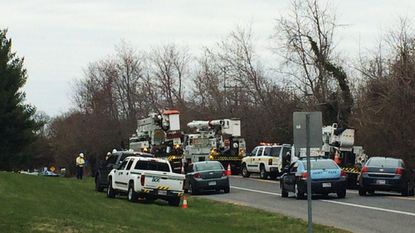
Costs for truck rolls more than doubled from $300 to $1,000
Customers are quicker to churn when reliability drops
The ecosystem is more interconnected through fiber, electric, microwaves and more.
A major problem is that organizations need to work together but there’s no system for them to coordinate. Companies still use phone and email. When it comes to outages and incidents, that is not scalable. With so many companies interconnected, it’s more difficult to troubleshoot issues and estimate accurate restoration times.
Imagine if you had an interactive map to see restoration times for every fiber cut, telecom incident or power outage in your area.
You may be asking yourself:
- How much faster could we troubleshoot issues?
- How many truck rolls would this reduce?
- How much would be saved on repair costs?
- How much faster could we communicate expectations with customers?
We’ll tackle these questions later.
In general, internal network monitoring systems have become very sophisticated. These systems have pinpoint accuracy when detecting internal outages. Although, today network operation center (NOC) teams have to triage issues within these interconnected network webs. The average telecommunication company’s “web” is interconnected with three dozen fiber and electric companies.
Before using Gisual, our clients ran network operations just like everyone else. When a network monitoring system detected an outage, NOC teams would troubleshoot the issue and dispatch a field technician. After a 45-minutes assessment the field technician would commonly find that the issue was from another provider. After the technician reported this to the NOC, the NOC would call all the providers they suspected the issue to originate from. One third would answer, one third would have no answers and the last third would be quick to say, "not us".
Then, the NOC would create tickets for each of the companies they think the issue could be from. On average, it took two hours to find out who has impacted their network. Then another six hours to get the final restoration time.
This was costing telecommunications huge time and money. Between phantom truck rolls ($1,000) and hours of calls and manual activities ($250). These no fault found (NFF) situations were costing too much money.
Now, anytime the network monitoring system detects an issue Gisual sends them automated intelligence on how others can be affecting their network.
Gisual is a private network where telecoms and utilities are sharing outage and incident ETRs with each other. Receive automated and accurate outage and incident ETRs without rolling trucks and making hours of calls. This is a live interactive map to track repair statuses and updates.
Free Download: Want to learn more about how to reduce costs and truck rolls the way the major telecoms do? Download our free Circuit Troubleshooting Cheatsheet.